Myopia - Taking it Seriously

[!info] This is the fourth in a series of posts about the epidemic of myopia (nearsightedness), my personal experience with it, and what people are doing about it. The third part is "Myopia - How Did This Happen?"
a personal history
I got eyeglasses when I was in second grade, before most of my peers. I don't think I was ready for the number of times they were bent, twisted, warped, or scratched from impacts while playing soccer etc. I may have been overeager to get them since my older brother and father had them. I likely have some sort of genetic predisposition, or at least a lack of genetic protection. Out of all my immediate biological family, I have a myopic father with prescription less than half as powerful as mine. Then several myopic siblings, each with less powerful prescriptions. One of these siblings was young enough to try myopia control as it was emerging, and has perhaps halted progression. Another did not have onset until adulthood and myopia is very slight.
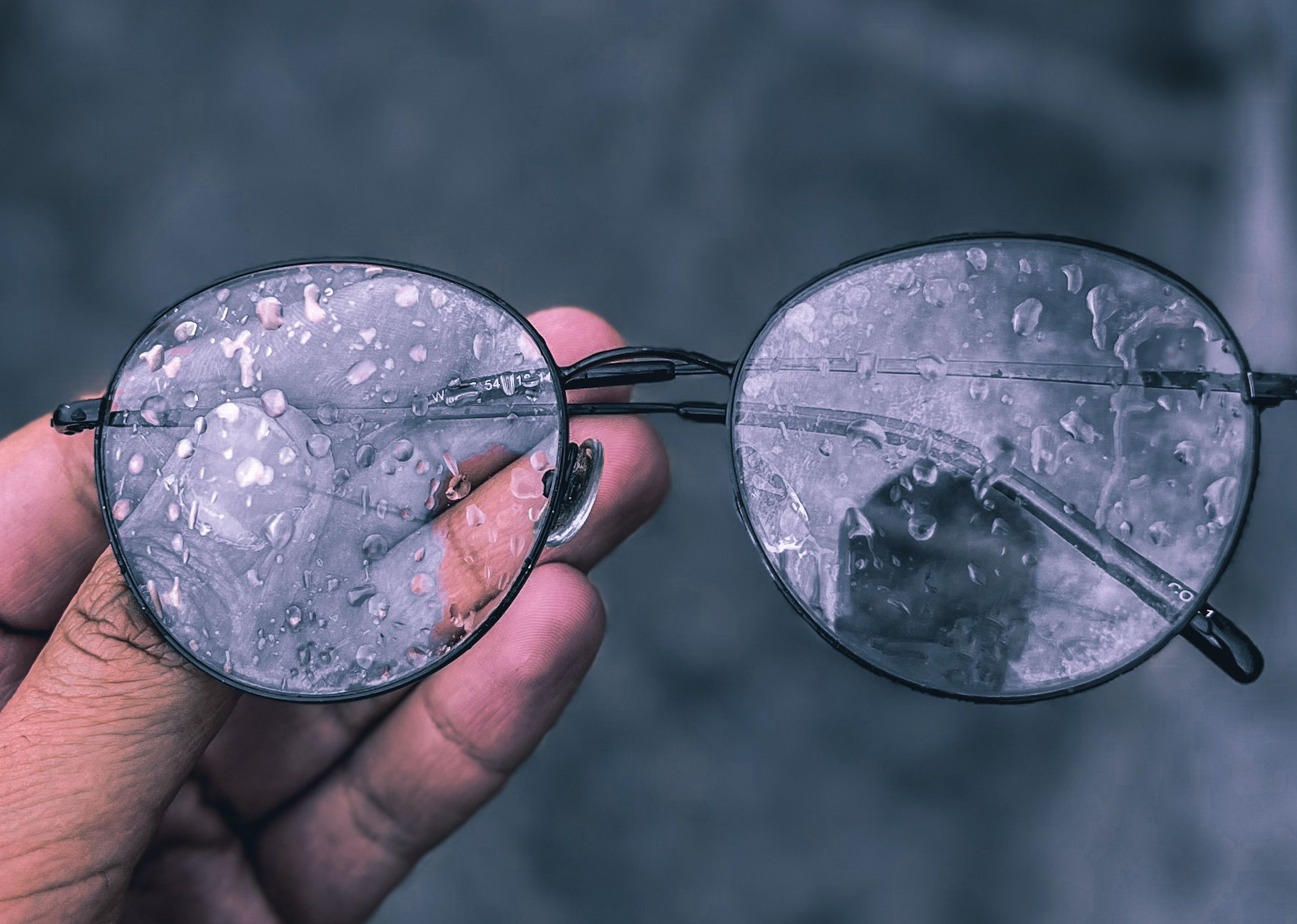
image credit Haider Haitem
My prescriptions worsened steadily under a heavy school burden of reading, and I didn't pay much attention because my providers didn't say anything, or I even seem to recall some saying "we'll give you a little extra boost". I studied computer science in college and went into software for a job, which involves heavy doses of screen time and close-up work, and limited time outdoors. This in addition to large amounts of recreational screen-time after work. You can understand that since I have the highest degree of correction of my siblings, I sometimes make inferences about environmental factors. I think I exceed the worst of any of them by about -2 D.

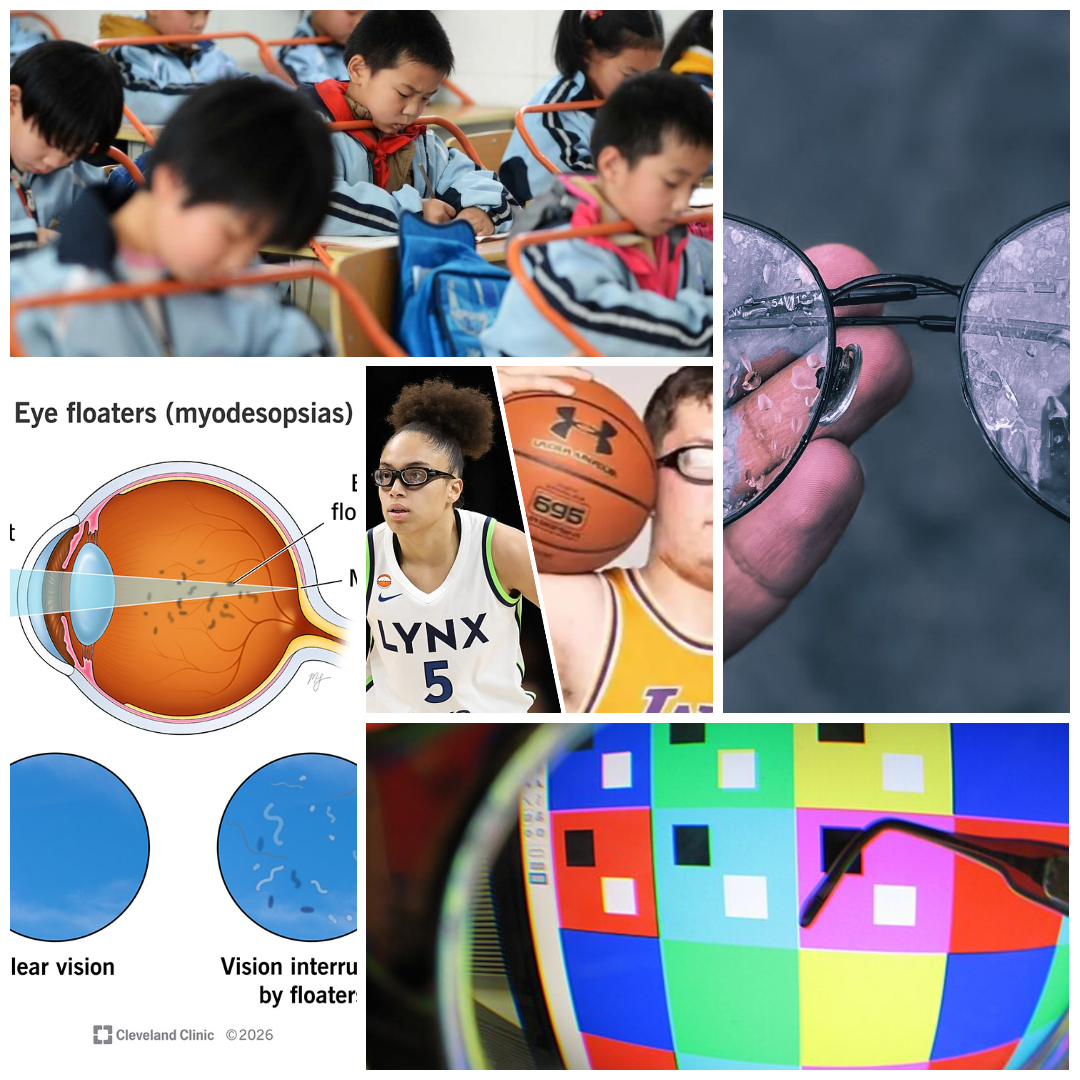
Some Chinese Primary schools have installed metal bars on desks in an attempt to keep students eyes at more distance from their work. source: South China Morning Post
I can remember a time in my late twenties, with a new prescription where I really noticed chromatic aberration for the first time - a phenomenon where the spectacle lenses are so thick that the colors start to separate, like with a prism. The opticians were selling me increasingly high-index lenses. 1.67, then 1.74 etc.
more floaters, and earlier
Around 2020, when I was still early thirties, I remember being in the woods looking off into the distance and really noticing a lot of floaters - dark or translucent spots and webby things in my visual field, along with some tiny little pinpoint 'snow' or 'sparkle' (after discussions and scans with practitioners, this is distinct from the "flashes" that usually accompany more imminent retinal trouble). I'd had some of this before but for some reason really noticed how many there were at the time. Thinking about it made me realize how annoying it is - they can briefly obstruct or cover objects, especially if your brain becomes aware of them. Though it works hard to kind of filter them out of your attention.
I did some internet searching which cautioned me that floaters can correlate or be a warning of impending retinal detachments, so I called an ophthalmologist and they got me in the next day! Fortunately this was not an impending retinal detachment, but they did note that my eye certainly looked like a highly myopic eye. They told me people with long eyes will get more floaters and earlier than many people do, and gave me some pamphlets describing how its collagen bundling up and bits of debris generated by the vitreous fluid in the eye pulling away from the retina. Sounds not nice.
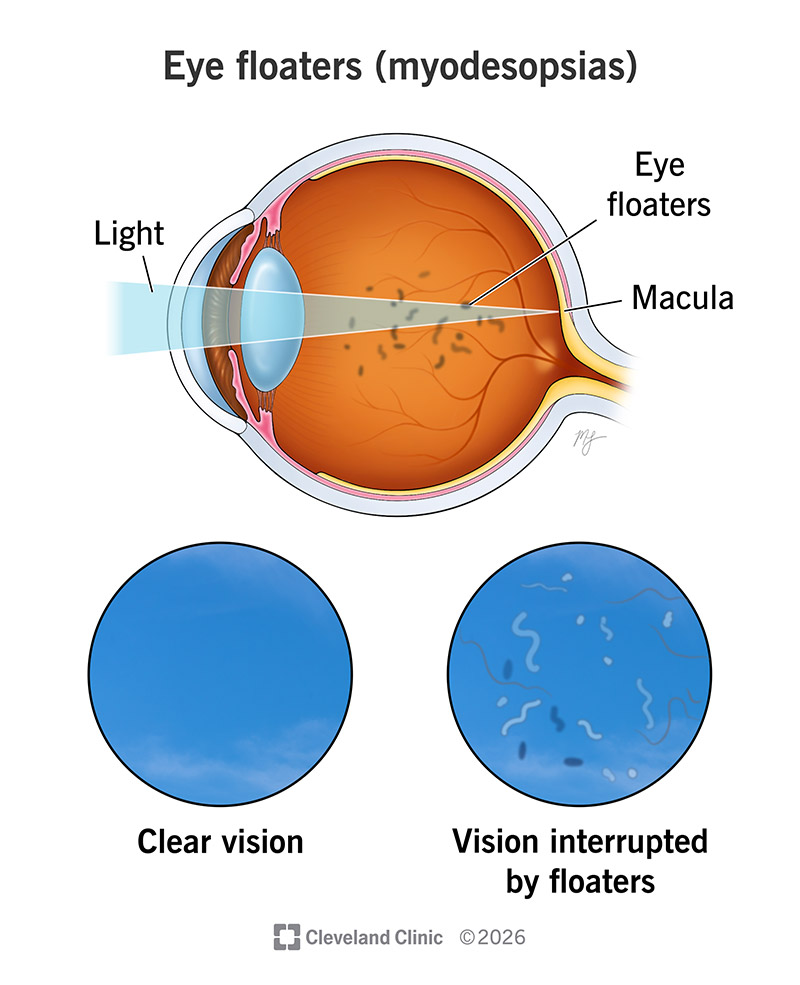
I'm not the only person who's bothered by them, there's an ophthalmologist devoted to researching how to mitigate them: https://www.vdmresearch.org/
They also said that I should refrain from impact sports like martial arts or even basketball due to these higher risks of retinal detachments, and that i should avoid bodily inversions like the "downward dog" yoga pose due to higher glaucoma risks (inversions raise eye pressure, which is associated to glaucoma).
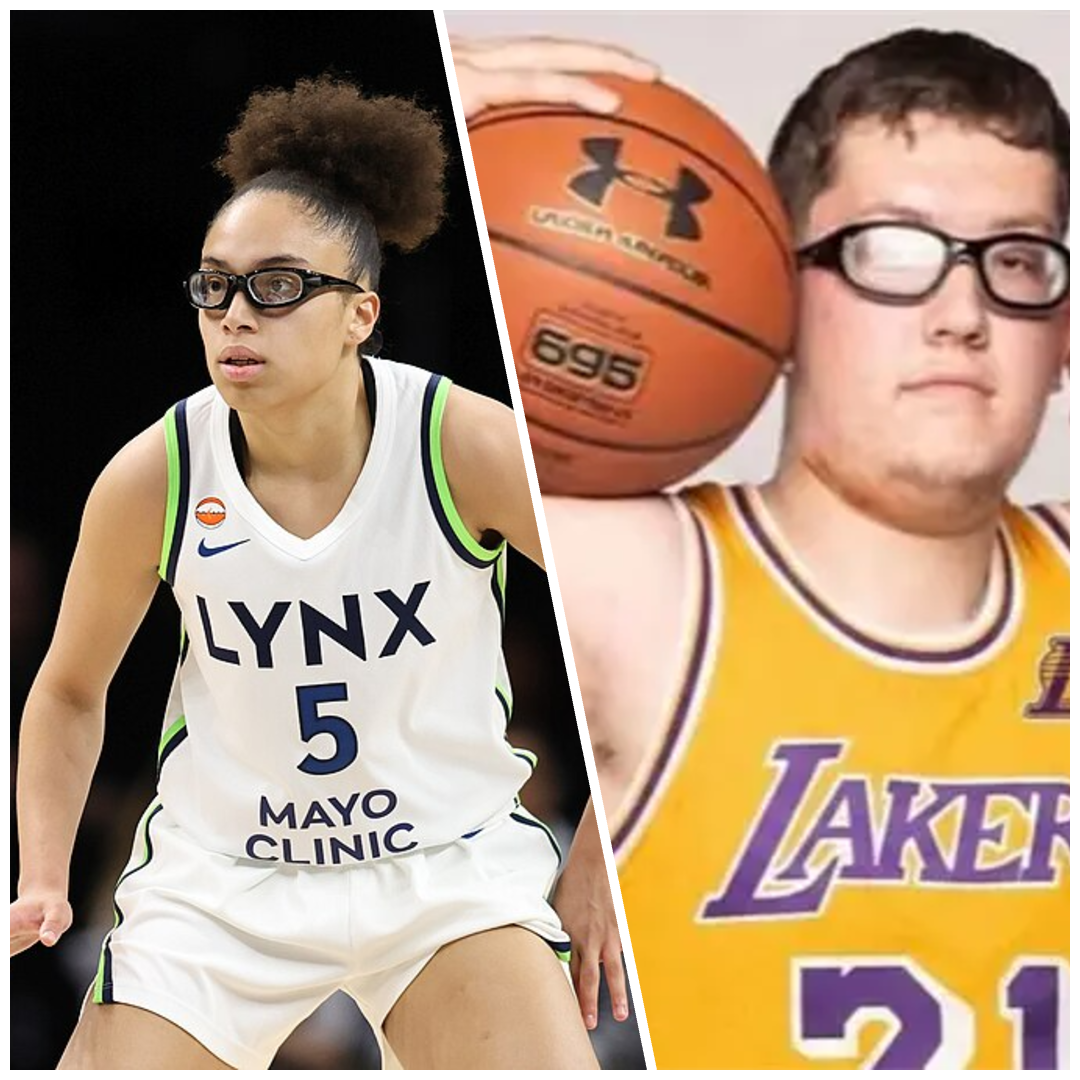
Two pros (Olivia Miles, Robbie Avila) who would be even better without the goggles, and hopefully have low-enough correction that they are not at risk for visual problems.
These are yet other items that made me feel abnormal - an outlier. I'm very fortunate to not have an intense visual disability, but there are lesser lifestyle elements like this that would not be much of a consideration for most people in the west (emmetropes - people with normal eyelengths).
the glasses rx shouldn't be getting worse
After coming back in for a regular yearly exam with the local ophthalmologist, they were about to prescribe me a notably stronger spectacle prescription. I said "that doesn't seem right, does it?" and they could not provide me a satisfactory explanation of how they could simultaneously believe that prescription doesn't change after one is 12 and yet they were going to give me a changed one.
Sometime before this, I'd also become aware of my kid brother (20 years younger) trying out orthokeratology to treat his own nearsightedness. He moved on to CooperVision misight daily lenses. I decided that, though I'd been told it was not possible for my eyes to get longer and worse in adulthood, I should check my recent eyeglass prescriptions to verify if they were roughly the same. What I learned was that instead over the prior decade, my mid-20s into my 30s, the refraction had indeed become stronger, suggesting that my eyes were indeed becoming longer, though not as quickly as they had when I was younger.
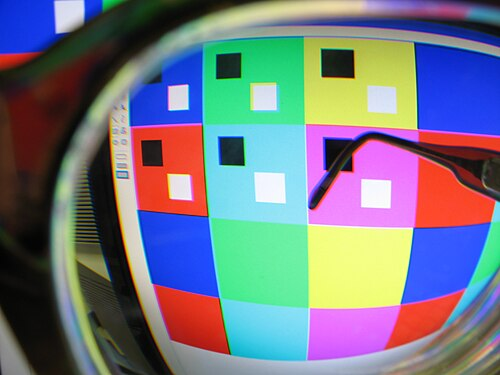
Prismatic color distortion shown with a camera set for nearsighted focus, and using -9.5 diopter eyeglasses to correct the camera's myopia.
This felt terrible and isolating. I felt like I was seeing something that no one acknowledged. One former provider said "sometimes we chase the prescription for a while" with no acknowledgement of other issues. The founder of one UK company that makes thick-framed glasses for high prescriptions recounts her sadness at continual prescription increases:
"After most appointments, I’ve had a little cry on the way home..."
At the time, it was very hard to find anything online that suggested adults could indeed get worse. But finally I felt I was not crazy when I came across the article https://reviewofmm.com/managing-adult-progressive-myopia/. There was someone who acknowledged that the problem was real. Since then more sources have emerged, as well as studies demonstrating this.
In the next part, I’ll talk more about the experience of searching for and finding something to address the problem.